This journey has already taken place. Similar journeys are planned; write to us if you would like to hear about the next one. Write to us
This journey follows the Bhagirathi upstream to the place where the Ganges begins. It opens gently, with a ritual bath and the evening Aarti in Rishikesh and the temples of Uttarkashi, before the road ends at Gangotri and the trail takes over. Four days of walking lead through Gangotri National Park to Gaumukh, the snout of the Gangotri Glacier, and up to Tapovan, where the group spends three days practising yoga and meditation in the shadow of Shivling, the Bhagirathi peaks and Meru. The way back descends to Haridwar for the Ganga Aarti at Har Ki Pauri.
Gallery
Journey highlights
Rishikesh
Nestled on the banks of the sacred Ganges River, Rishikesh is one of India’s most important spiritual destinations. Known as the Yoga Capital of the World, it has welcomed sages, pilgrims, and spiritual seekers for centuries.
Ancient temples, traditional ashrams, and sacred riverside ghats reflect the city’s deep connection to Hindu culture and tradition. According to Hindu belief, meditation and spiritual practice in Rishikesh bring people closer to inner peace and divine wisdom. Surrounded by the foothills of the Himalayas, Rishikesh is a place where history, spirituality, nature, and living Indian traditions come together.
Shatrughan Ghat
Shatrughan Ghat is one of the peaceful and spiritually significant places in Rishikesh. Located on the banks of the sacred Ganges River, it is connected with ancient Hindu traditions and the spiritual heritage of the region.
According to local belief, Lord Shatrughna, the brother of Lord Rama, performed meditation and spiritual practices here. Today, the ghat remains a place of prayer, reflection, and traditional rituals, offering visitors a quieter and more authentic atmosphere away from the busy parts of Rishikesh.
Kashi Vishwanath Temple
Kashi Vishwanath Temple in Uttarkashi is an ancient and highly respected Hindu temple dedicated to Lord Shiva. Located near the banks of the Bhagirathi River, it is an important place of worship and a spiritual stop for pilgrims travelling towards Gangotri.
The temple is known for its deep connection to local Himalayan traditions and its peaceful, sacred atmosphere. It reflects the enduring spiritual heritage of Uttarkashi, often called the “Kashi of the North.”
Shakti Temple
Located beside the ancient Kashi Vishwanath Temple, the Shakti Temple is one of the most fascinating and spiritually significant places in Uttarkashi. Dedicated to the Divine Mother, known as Shakti, the temple represents divine feminine energy, strength, protection, and the power that sustains the universe.
The temple is best known for its remarkable Trishul, a giant sacred trident standing at the entrance. According to local tradition, the trident is connected with Goddess Durga, who used it to defeat a powerful demon. For generations, devotees have come here to offer prayers and receive the blessings and protection of the Divine Mother.
Gangotri
Gangotri is one of the four sacred destinations of the Char Dham Yatra, together with Yamunotri, Kedarnath, and Badrinath. Situated high in the Garhwal Himalayas, Gangotri is dedicated to Goddess Ganga and is one of the holiest pilgrimage sites in India.
According to Hindu tradition, King Bhagiratha performed intense meditation and spiritual practices to bring the heavenly river Ganga to Earth. Lord Shiva received the powerful river in his hair and gently released its waters into the Himalayas, preventing the force of its descent from destroying the world. Gangotri is therefore more than a mountain village. It is a sacred meeting point of faith, nature, mythology, and pilgrimage. Surrounded by forests, glaciers, and snow-covered peaks, it marks the beginning of a journey towards the source of one of the world’s most revered rivers.
Surya Kund
Surya Kund is a sacred natural water pool near the Gangotri Temple. The waters of the Bhagirathi River flow powerfully through the rocky landscape, creating an impressive and energetic scene.
The name means “Pool of the Sun God,” and the place is connected with traditional Hindu beliefs and rituals. Pilgrims often stop here to offer prayers and experience the power of the river before visiting the temple. Surya Kund is also known for its beautiful views and the sound of rushing water echoing through the surrounding Himalayan valley.
Gangotri Temple
The Gangotri Temple is dedicated to Goddess Ganga, the sacred river worshipped throughout India as a divine mother and a source of spiritual purification. The present temple was built in the eighteenth century and stands on the banks of the Bhagirathi River.
Every year, thousands of pilgrims travel to Gangotri to offer prayers, take part in traditional ceremonies, and receive blessings from the Goddess. During the pilgrimage season, the temple becomes a vibrant centre of devotion, filled with chanting, rituals, bells, and the sound of the river. The temple is open during the warmer months. In winter, when heavy snow covers the region, the sacred image of Goddess Ganga is moved to the nearby village of Mukhba, where worship continues until the temple reopens.
Bhagirathi River
The Bhagirathi River is one of the main headstreams of the Ganges. It begins at Gaumukh, the dramatic glacier snout of the Gangotri Glacier, and flows through the high valleys of the Garhwal Himalayas.
The river is named after King Bhagiratha, whose devotion and spiritual discipline, according to Hindu tradition, brought the sacred Ganga from heaven to Earth. For this reason, the Bhagirathi is not seen merely as a river but as a living expression of the divine. Its clear, fast-flowing waters accompany pilgrims and trekkers throughout the Gangotri region. The river represents purity, life, transformation, and the spiritual connection between the Himalayas and the plains of India.
Gangotri National Park
Gangotri National Park is a vast protected area of high mountains, glaciers, alpine meadows, forests, and river valleys. It is one of the most important natural areas in the Indian Himalayas and protects the fragile ecosystem surrounding the upper Bhagirathi valley.
The park is home to a variety of Himalayan wildlife, including Himalayan blue sheep, musk deer, Himalayan tahr, and, in remote areas, the elusive snow leopard. Its landscapes change dramatically with altitude — from pine and birch forests to rocky valleys, glaciers, and high alpine terrain. The trek from Gangotri to Gaumukh and Tapovan passes through this protected wilderness. It is a journey into a landscape where nature remains powerful, remote, and deeply connected with local spiritual traditions.
Chirbasa
Chirbasa is one of the main resting places on the trail from Gangotri to Gaumukh. Its name means “the home of pine trees,” referring to the trees that grow in this part of the valley.
The campsite is surrounded by dramatic Himalayan scenery and offers beautiful views of the Bhagirathi River and the snow-covered peaks rising above the valley. It is an important place for trekkers to rest, acclimatize, and experience the silence of the mountains. As the trail continues beyond Chirbasa, the landscape gradually becomes more open and rugged, while the forests give way to high-altitude terrain.
Gaumukh
Gaumukh, meaning “Cow’s Mouth,” is the glacier snout of the Gangotri Glacier and one of the most sacred places in the Himalayas. Its name comes from the shape traditionally associated with the opening of the glacier, from which the Bhagirathi River emerges.
For Hindus, Gaumukh is regarded as the earthly source of the sacred Ganga. Pilgrims and trekkers travel here to experience the powerful connection between the natural world and ancient spiritual tradition. Standing before the glacier is a remarkable experience. Ice, rock, water, and high Himalayan peaks create a landscape that feels both ancient and alive. Gaumukh is not only a geographical destination but also a place of pilgrimage, reflection, and respect for the forces of nature.
Gangotri Glacier
The Gangotri Glacier is one of the largest and most important glaciers in the Himalayas. It stretches through the high Garhwal mountains and feeds the Bhagirathi River, one of the main sources of the Ganges.
The glacier is surrounded by some of the region’s most impressive peaks, including Shivling and the Bhagirathi mountains. Its vast field of ice and snow forms a dramatic landscape shaped by thousands of years of natural change. The Gangotri Glacier is also a reminder of the fragile balance of the Himalayan environment. Changes in climate and temperature are affecting glaciers throughout the region, making the protection of this landscape increasingly important.
Bhojbasa
Bhojbasa is a high-altitude campsite located between Chirbasa and Gaumukh. Its name comes from the Bhojpatra, or Himalayan birch tree, whose bark was traditionally used as a writing material for ancient manuscripts.
The area is open and wide, surrounded by dramatic mountain views. From Bhojbasa, the magnificent Bhagirathi peaks rise above the valley, creating one of the most memorable landscapes along the trek. Bhojbasa is an important place for rest and acclimatization before continuing towards Gaumukh or climbing to Tapovan. At night, the clear mountain sky and the silence of the valley create a powerful sense of distance from the modern world.
Shivling, Bhagirathi, and Meru
The mountains surrounding Gangotri and Tapovan are among the most impressive peaks in the Indian Himalayas.
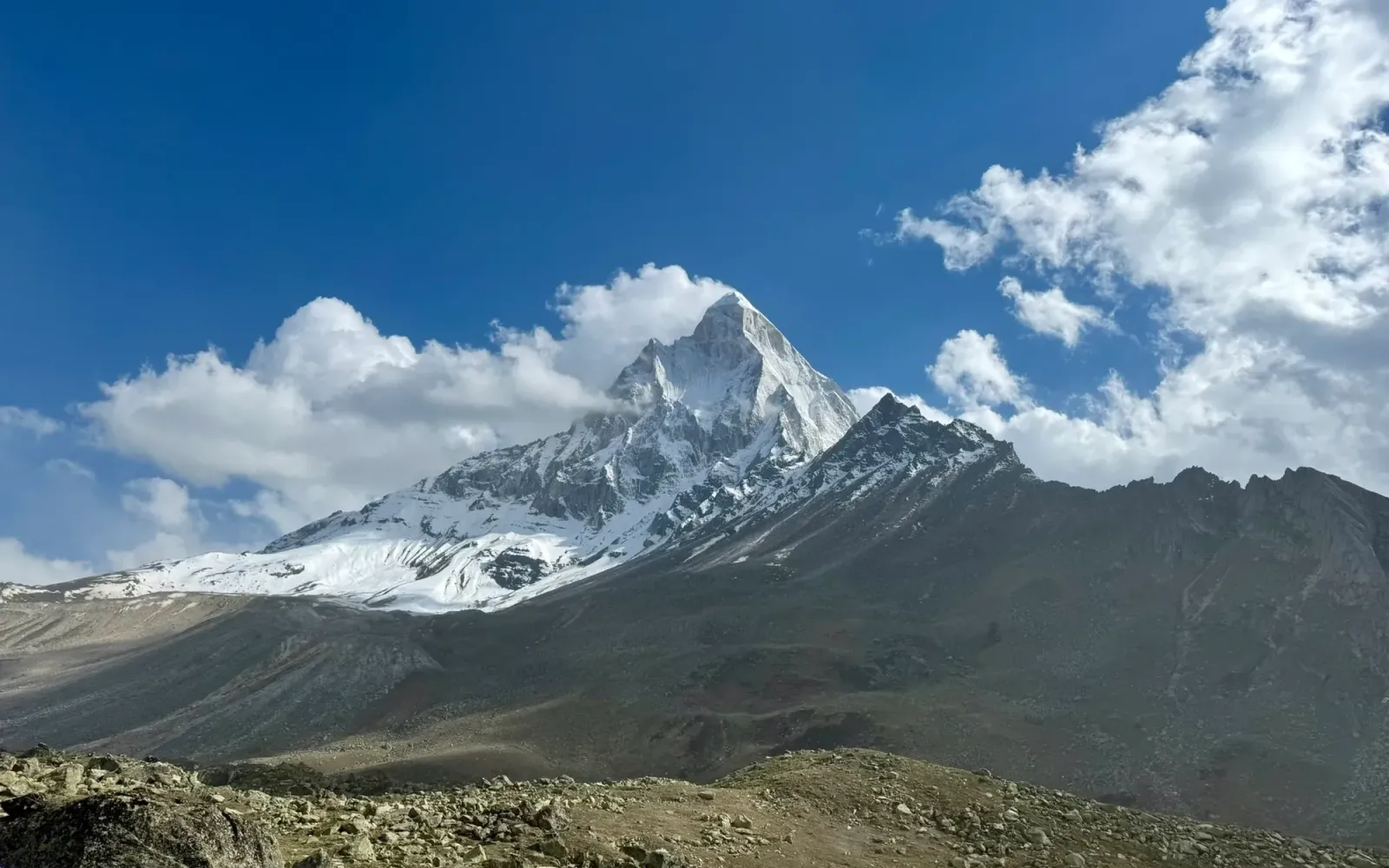
Mount Shivling is famous for its dramatic pyramid-like shape and is often compared to the Matterhorn. Its name connects the mountain with Lord Shiva, and its powerful form has made it both a sacred symbol and a legendary challenge for mountaineers. The Bhagirathi Peaks form a magnificent mountain group above the upper valley. Their snow-covered ridges and steep faces dominate the horizon and create an unforgettable backdrop to the journey through the region. Mount Meru is another iconic Himalayan peak, known for its striking beauty and extreme climbing difficulty. In Hindu and Buddhist traditions, Mount Meru is also a sacred cosmic mountain, believed to stand at the centre of the universe.
Tapovan
Tapovan is a beautiful high-altitude meadow located above Gaumukh. Reaching it requires a steep ascent across rocky terrain and glacial landscapes, but the reward is one of the most extraordinary views in the Garhwal Himalayas.
The name Tapovan can be understood as “the forest or place of spiritual practice.” For centuries, sages and spiritual seekers have come to remote Himalayan areas like this to meditate and live close to nature. Tapovan offers panoramic views of Mount Shivling, the Bhagirathi peaks, and Mount Meru. The open meadows, flowing streams, glaciers, and towering mountains create a powerful atmosphere of peace and vastness.
Shivling base camp area
The area around Tapovan serves as an important base for mountaineering expeditions towards Mount Shivling. Surrounded by glaciers, rocky ridges, and high Himalayan peaks, it is a remote environment where the beauty of the mountains is matched by their power and unpredictability.
From this area, Mount Shivling rises dramatically above the landscape. Its steep, elegant shape makes it one of the most recognizable mountains in India and a place of great importance to climbers and spiritual travelers alike. The journey through this region is not only an adventure. It is an encounter with the raw energy of the Himalayas — a place where ancient spiritual traditions, glaciers, high mountains, and human determination come together.
Itinerary
Day 1Dehradun airport – Rishikesh
a ritual bath in the sacred Ganges River Ganga Aarti ceremony at Shatrughan Ghat
Day 2Rishikesh – Uttarkashi (1,158 m)
Uttarkashi Kashi Vishwanath Temple Shakti Peeth
Day 3Uttarkashi – Gangotri (3,050 m)
Gangotri – Char Dham Surya Kund Gangotri Temple
Day 4Gangotri – Chirbasa (3,600 m), 9 km trek / approx. 4–5 hours
Bhagirathi River Gangotri National Park Chirbasa camp
Day 5Chirbasa – Bhojbasa (3,800 m), 5 km trek / approx. 3 hours
Gaumukh Gangotri Glacier Bhojbasa
Day 6Bhojbasa – Tapovan (4,320 m), 8 km trek / approx. 6 hours
Shivling, Bhagirathi, and Meru Tapovan Shivling base camp area
Days 7–9Tapovan – Shivling Base Camp area (4,320 m)
morning and evening yoga practice, meditation, and satsang optional walks and excursions around the vast area of the Shivling base camp
Day 10Tapovan – Chirbasa (3,400 m), 12 km trek / approx. 5–6 hours
glacial and moraine sections Chirbasa
Day 11Chirbasa – Gangotri – Uttarkashi, 9 km hike / approx. 3 hours
Gangotri Temple Uttarkashi
Day 12Uttarkashi – Haridwar
Mahamandaleshvara Swami Atmanandi Ashram Ganga Aarti ceremony at Har Ki Pauri
Day 13Haridwar – Dehradun Airport – Delhi
Har Ki Pauri Dehradun Airport
Day 14Departure
your connecting international or domestic flight according to your own itinerary
Upcoming journeys
The magic of South India
Tamil Nadu, Puducherry and Kerala
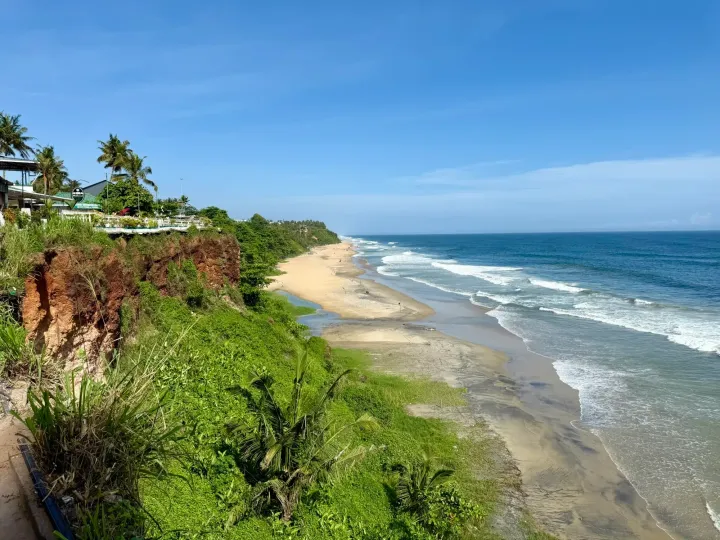
Travel from the great temple cities of Tamil Nadu across the Western Ghats into the tropical landscapes of Kerala. In sixteen unforgettable nights we encounter living spiritual traditions, walk among tea plantations, explore the forests and waters of Periyar, spend a night aboard a houseboat and rest beside the Arabian Sea.
View the journey →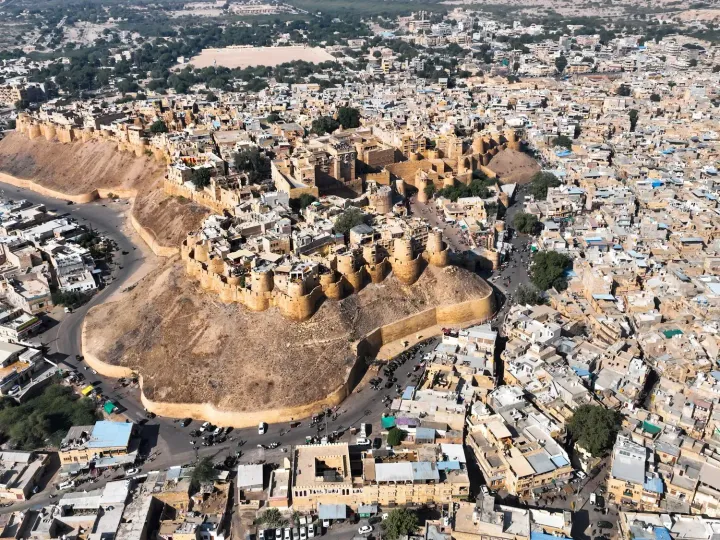
Treasures of Rajasthan
Jaipur, Marwar, the Thar Desert and Mewar
A fourteen-day private group journey through Rajasthan, from the royal cities of Jaipur, Jodhpur and Udaipur to the Thar Desert, the sacred lake of Pushkar, the marble temples of Ranakpur and a night inside Om Ashram. Morning yoga, a measured pace and time for the atmosphere of each place.
View the journey →